Public space is full of opinions and debate, yet many people feel unheard and unsure. The problem is not too few voices. There are too few spaces where disagreement can exist without turning into conflict or silence. We see this most clearly in families, schools, peer groups, and local communities.
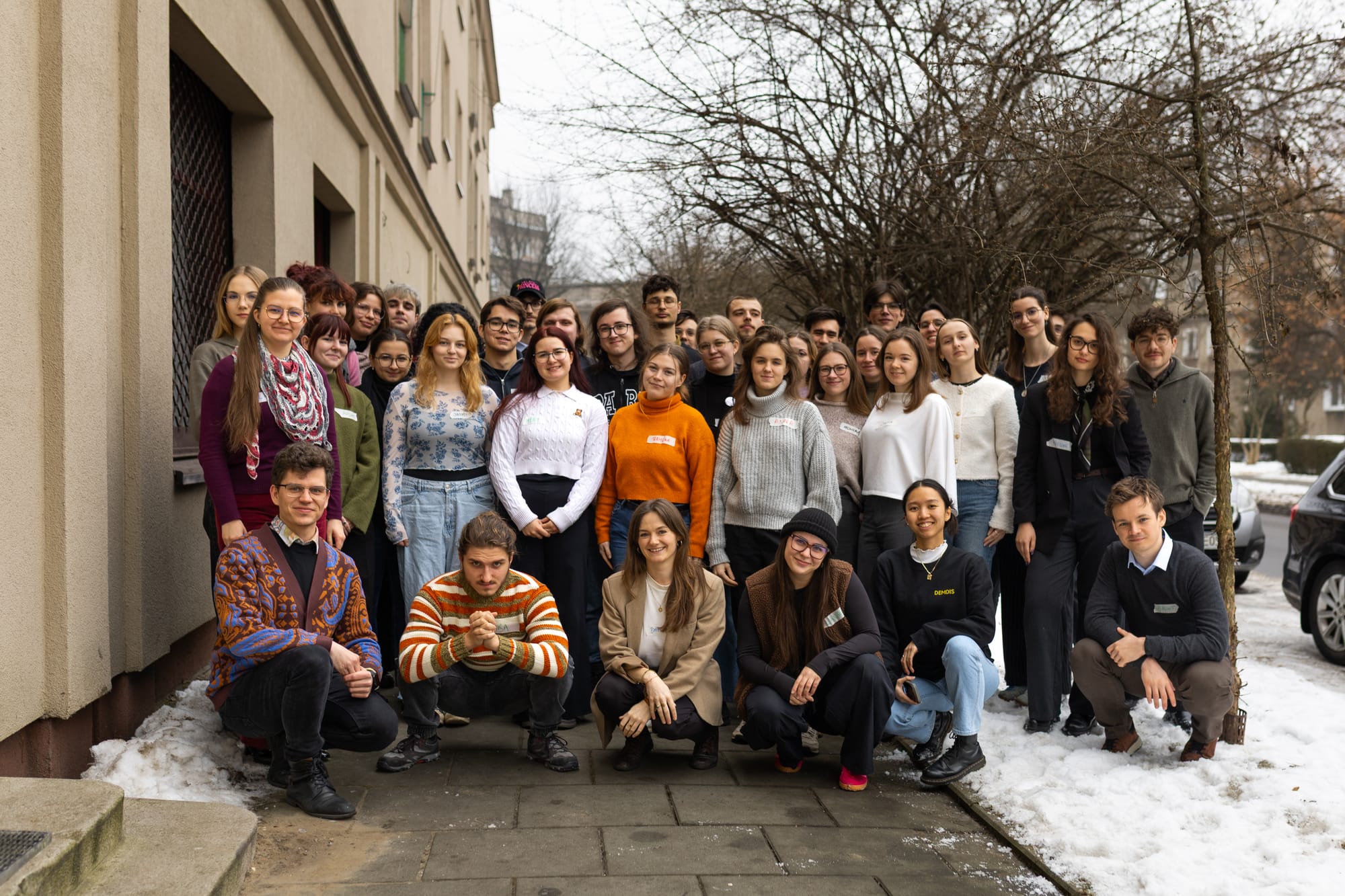
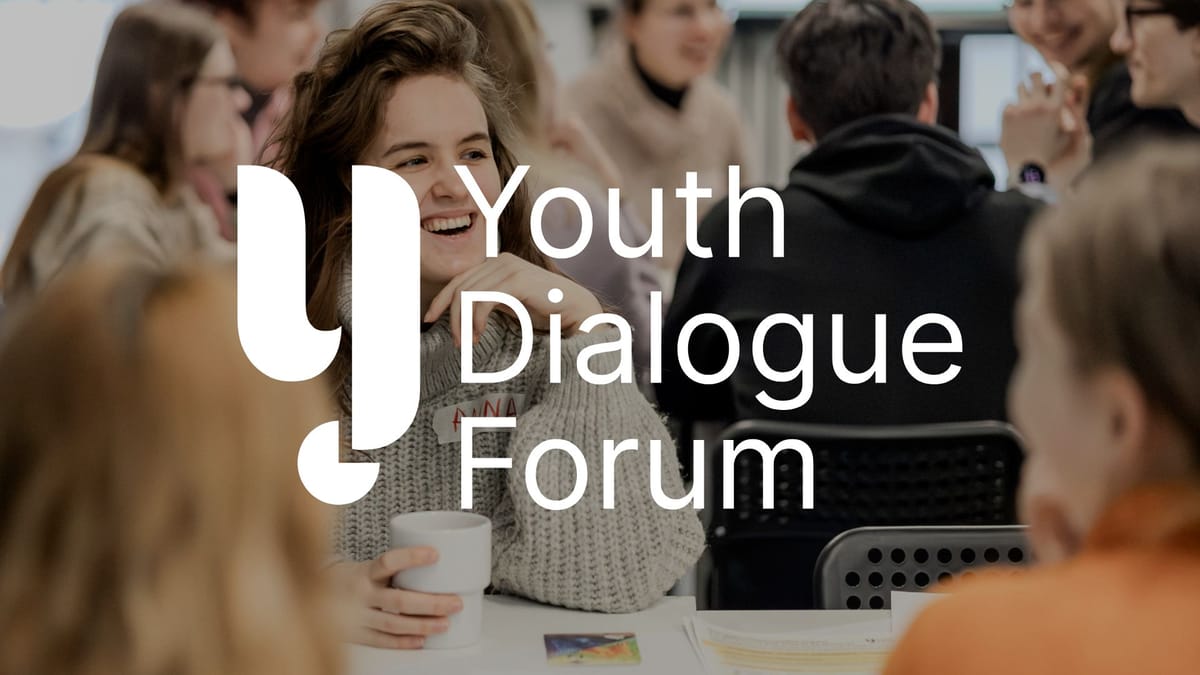
The second edition of Youth Dialogue Forum (YDF) 2025 explored this tension with young people from Slovakia, Czechia, Poland, and Hungary. It was not another debate about who is right. It did not try to correct beliefs. It asked a simpler question: What happens to our relationships and sense of agency when misinformation enters daily life? And if harm happens there, what can we do there?
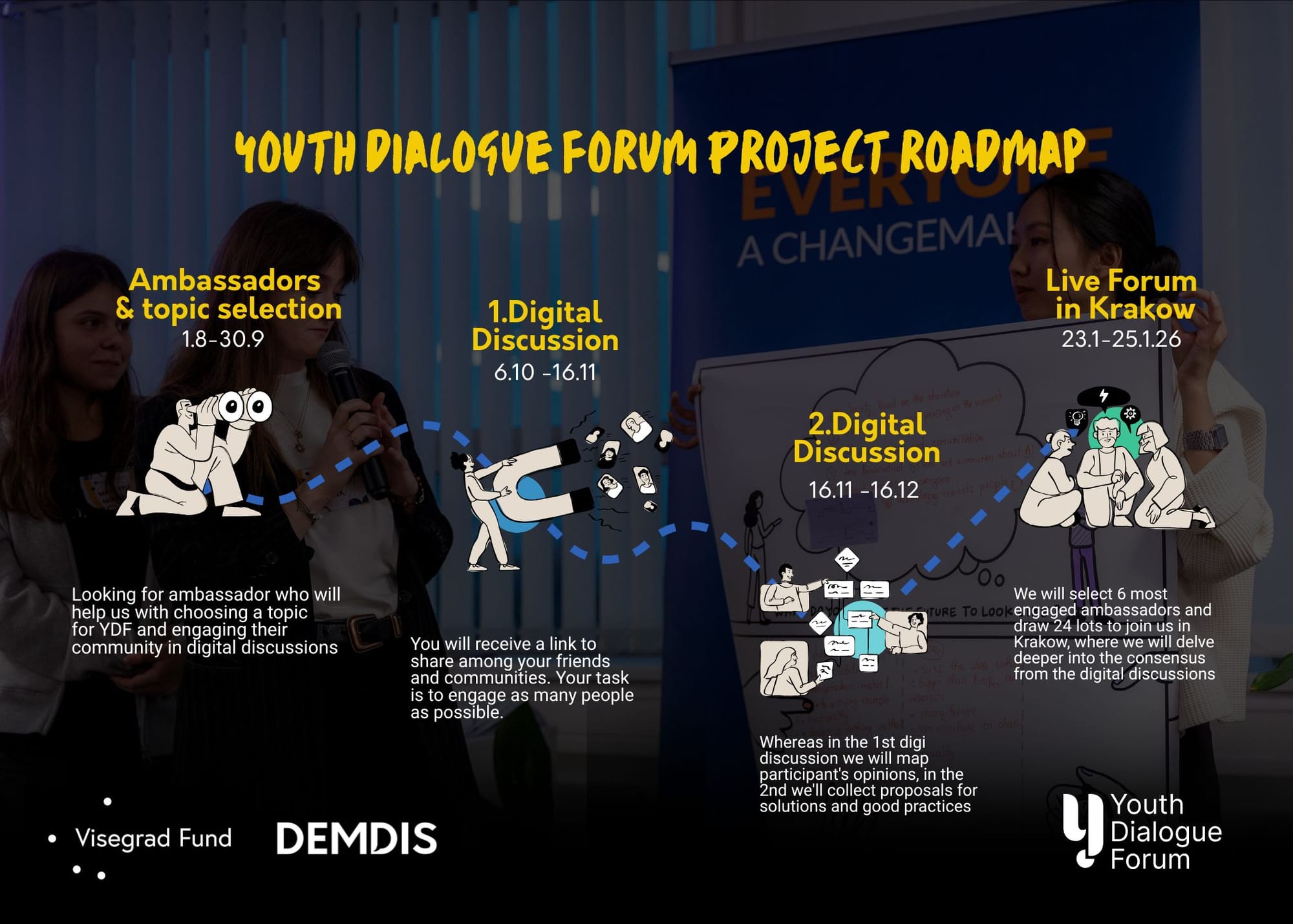
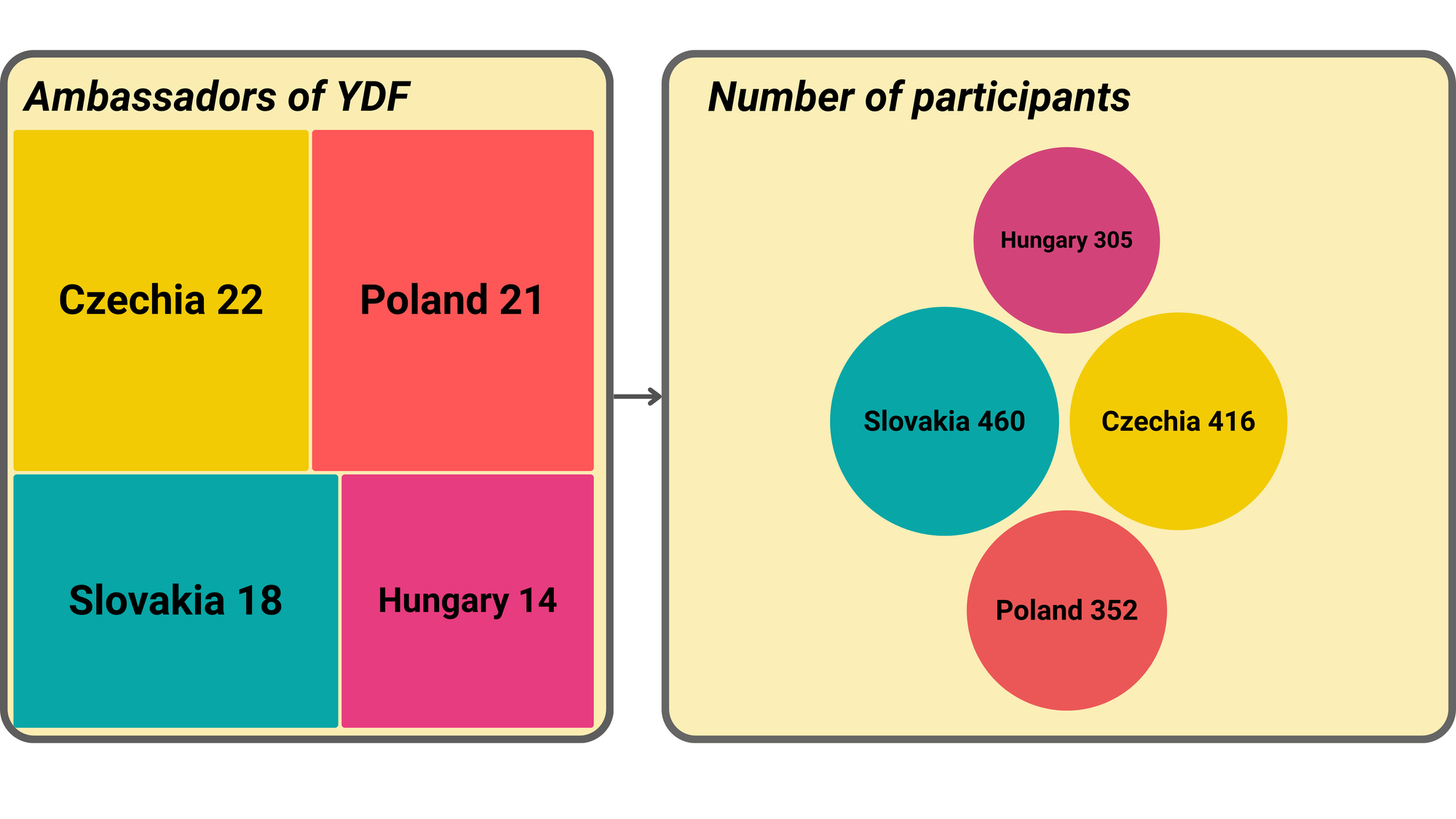
We combined large-scale digital discussion with face-to-face deliberation to understand real experiences and responses to misinformation. Across two digital discussions, 1,533 participants generated 187 statements and cast over 43,000 votes. 30 Selected participants then co-created practical recommendations during a live forum.
Below are the key takeaways - the full PDF report is available the link below.
Key findings
Misinformation strains relationships
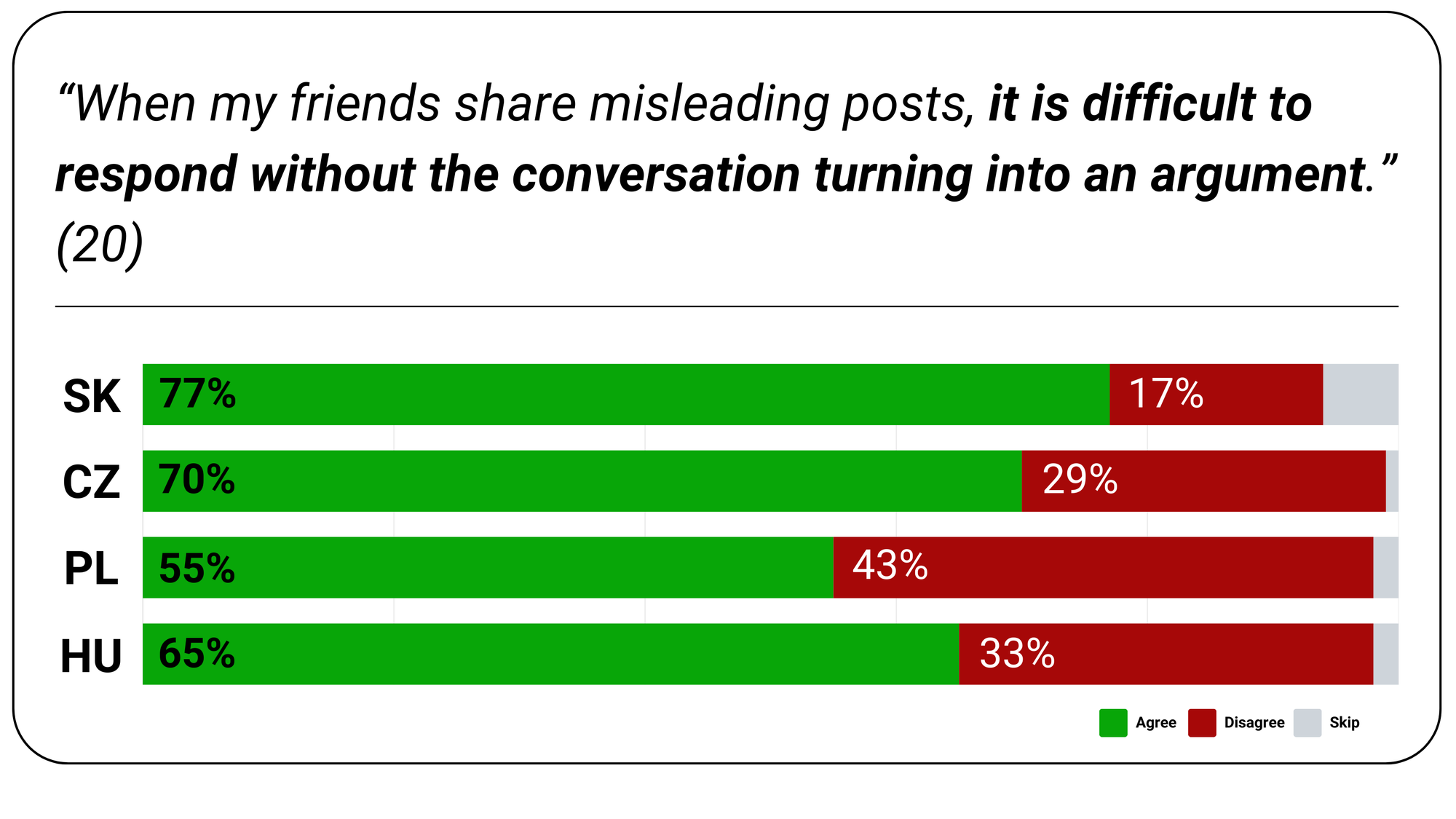
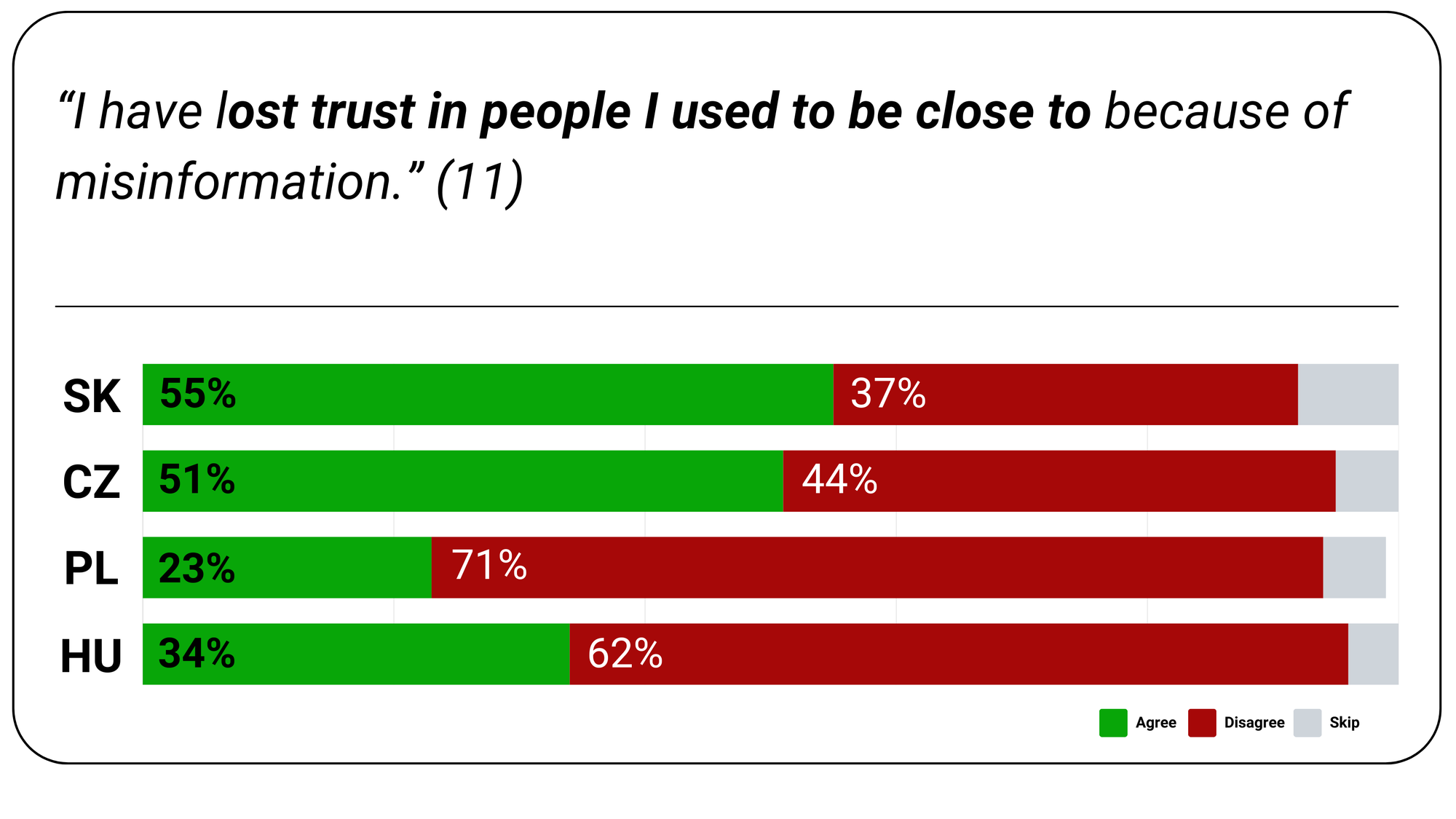
Young people most strongly perceive misinformation as a force that makes everyday conversations risky, creates tension in families and friendships, and erodes trust.
The main differences are within countries, not between them
Across all four V4 countries some young people feel powerless, others remain confident in their ability to act. Perceived impact does not automatically lead to disengagement. Many who feel the pressure most strongly still express responsibility and willingness to respond.
Emotional exhaustion is a major driver of withdrawal
Participants described debate fatigue, avoidance of conflict, strategic disengagement and self-protection through reduced exposure. Disengagement often emerges from overload.
Disengagement is not a natural state
YDF 2025 strengthens our belief that innovative combinations of CivTech and face-to-face dialogue can bridge digital mapping with real-world co-creation. When participation is structured, rewarding and grounded in lived experience, it produces both insight and ownership. It engages the disengaged and invites in those who feel unheard.
Designing those spaces well is the core mission of DEMDIS. The second edition of YDF once again demonstrated that thoughtfully designed participatory models can function as a new layer of democratic practice. The potential of democratic innovation remains far from exhausted.
 Klára Kaničárová
Overview of the results from the digital discussions.
Participant’s Recommendations Summary
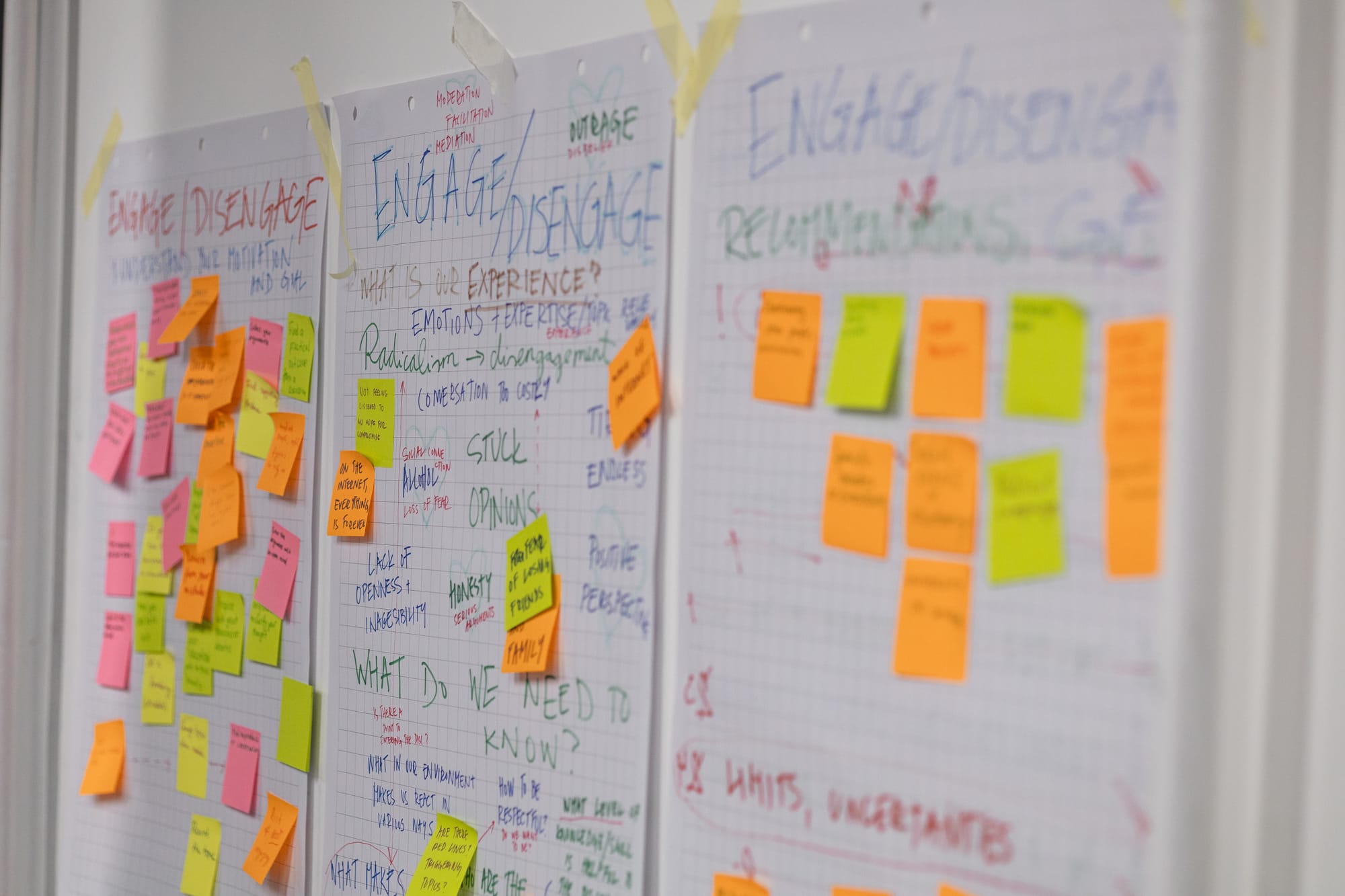
Five thematic groups co-created practical strategies grounded in everyday situations:
- Engage or disengage strategically - set boundaries and choose battles carefully.
- Navigate uncertainty responsibly - adopt simple habits for evaluating information.
- Support others without moralizing - preserve dignity and relationships.
- Stay engaged at lower cost - remain visible without escalating conflict.
- Protect emotional well-being - regulate exposure and reactions.
Design Insight
YDF 2025 successfully demonstrates that:
- Disengagement is not a fixed trait.
- Participation depends on careful process design.
- Structured, fair, and rewarding participation strengthens agency.
- Combining civic tech with deliberation bridges scale and depth.
When young people are invited into carefully designed spaces rooted in lived experience, they demonstrate reflection, responsibility, and capacity for cross-border dialogue.
Overview of the digital discussions
 Michal Horský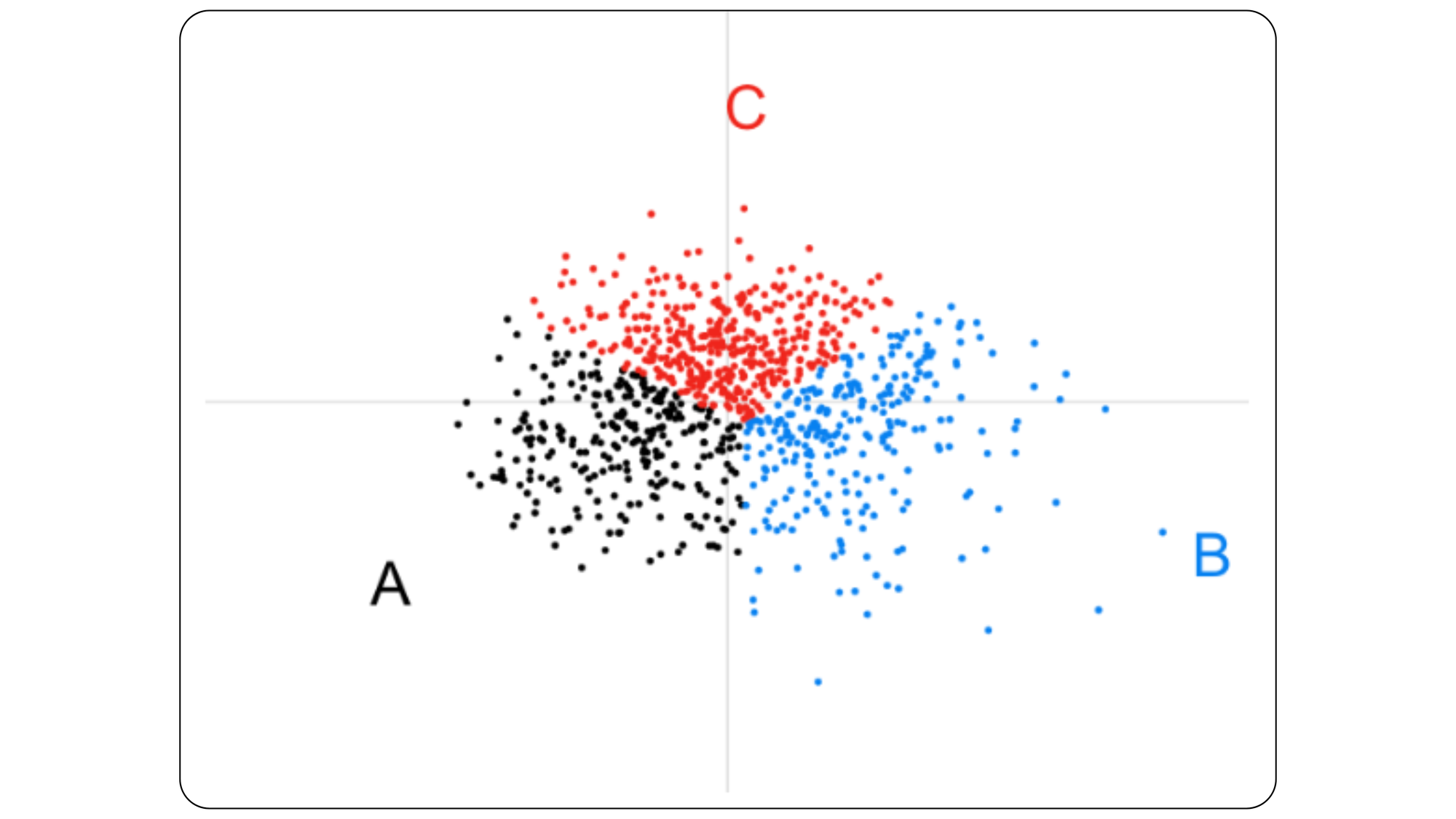
Main impact areas
To organize what emerged, the findings were grouped into five impact areas. Misinformation:
- makes everyday conversations risky,
- overwhelms us with uncertainty and slowly erodes our ability to trust,
- affects some people more than others and turns attempts to help into tension,
- discourages people from speaking up and pushes many to withdraw from discussions and public life,
- overwhelms us emotionally.
These categories help show the main patterns in a clear way and were also the basis of the thematic groups on the live forum.
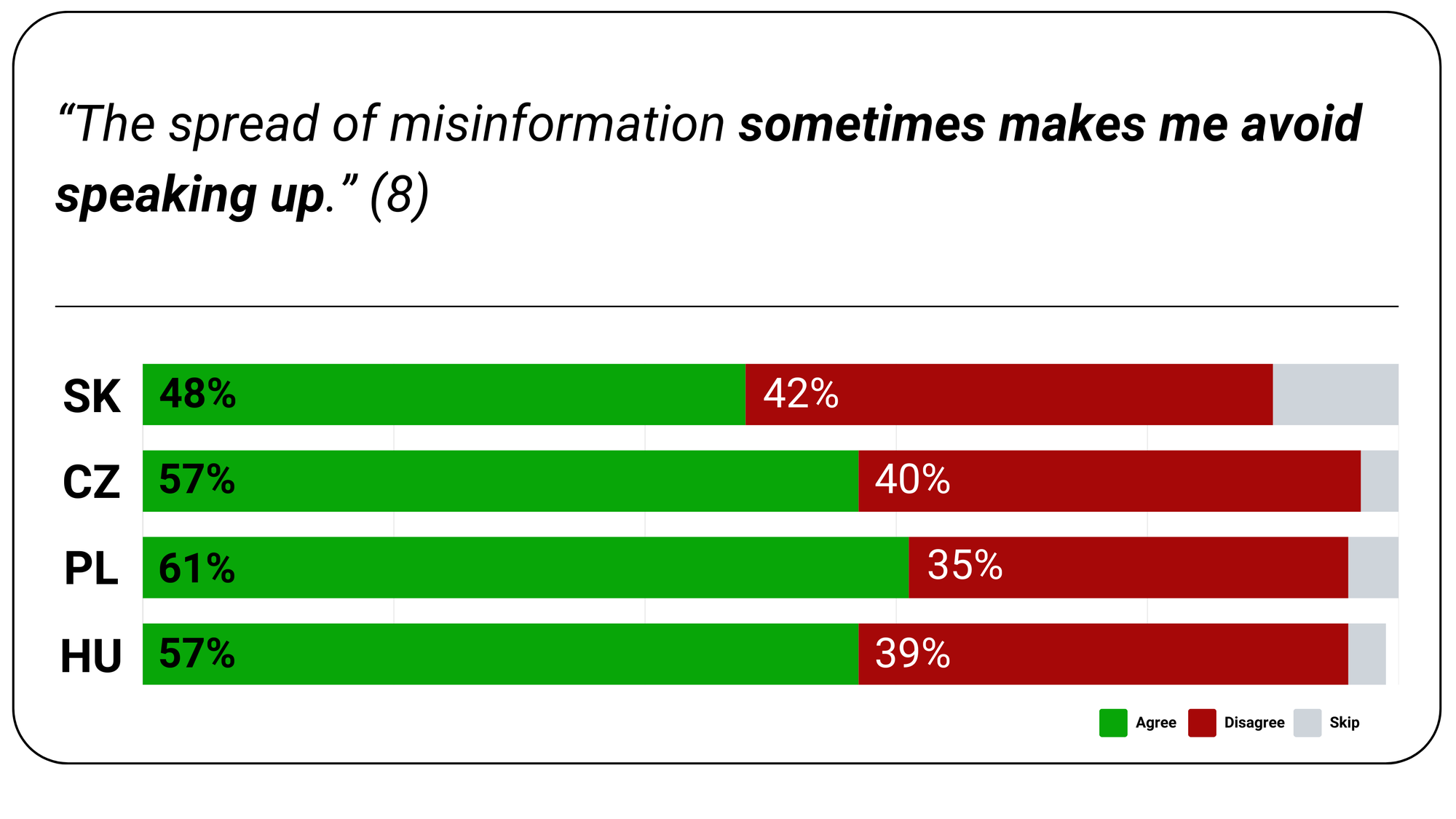
What do the Digital Modules Tell Us
Across the V4, false information is seen as a major issue, but the main differences are within countries, not between them. In every country, young people are divided in how powerless they feel in the face of misinformation. Some feel they can still influence what happens, while others struggle to see how they can make a difference. But it is a positive sign that in every country there are young people who do not feel powerless.
This shows that responding is possible, and it points to a shared task. Schools, social media platforms, and governments must do their part, because they shape the information space. At the same time, young people also have a role, because their everyday choices online and in their communities affect what they amplify and what they challenge. So what does this role look like in practice?
From Impact to Response
While the digital components of the overall design aimed to map the problem, the design of the live event prioritized two connected goals:
- Gain Common Understanding of the major impacts of misinformation on our lives and communities (What is it and what it does)
- Create peer to peer recommendations on what we can actually do in our lives.
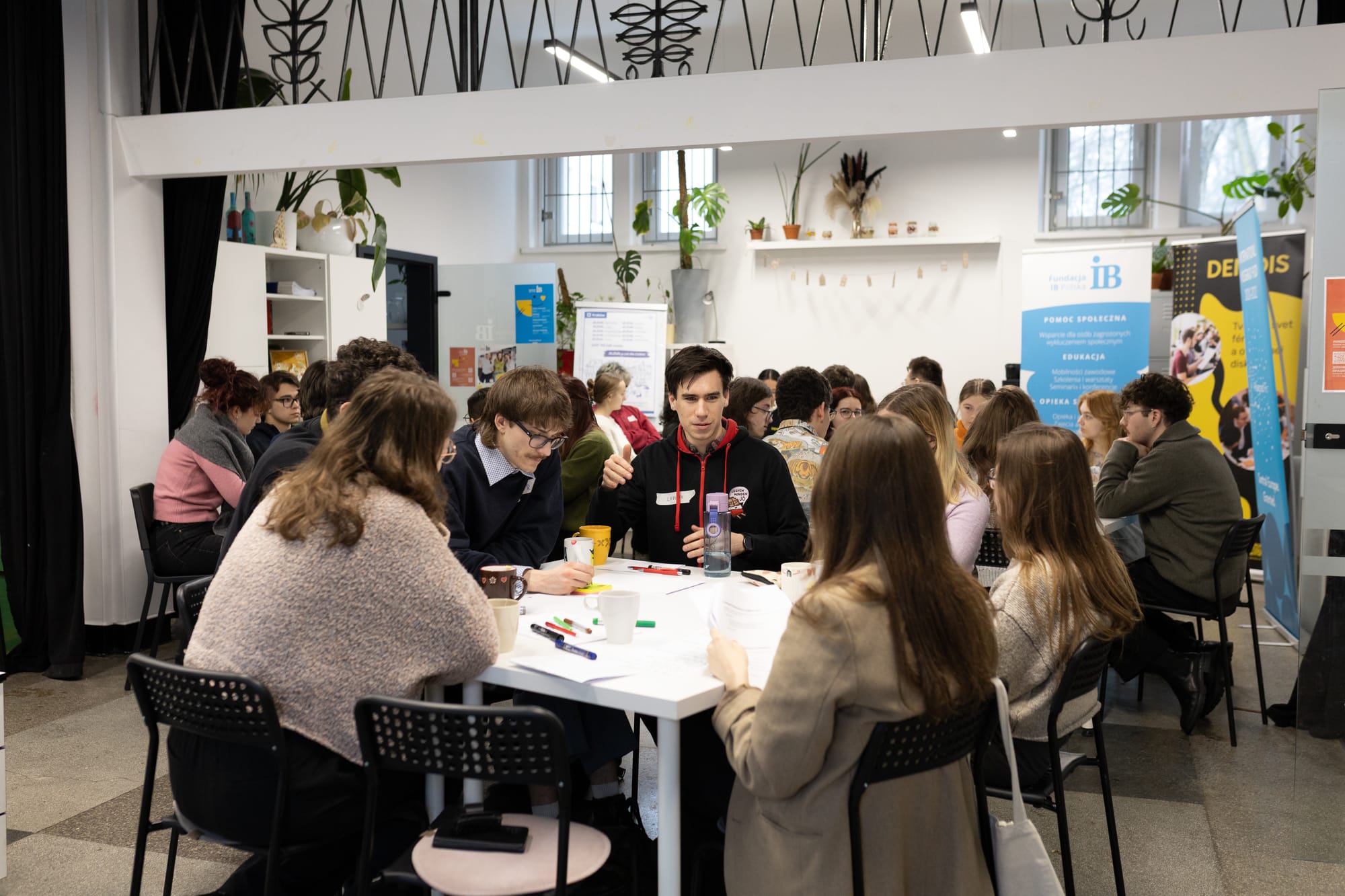
The design of the live forum was based on five thematic groups according to the results of the first digital discussion, titled How does misinformation affect daily life and communities? and supported by the tentative solution-finding of the second digital discussion titled Don’t panic, organize. How do we help each other deal with constant misinformation? The following groups were identified on the basis of the main impact areas outlined in section 3:
- Engage or Disengage
- Trust, Confusion & Sense-Making
- Supporting Others Without Preaching
- Participation, Voice & Withdrawal
- Emotional Self-Protection
Engage or Disengage
The goal of this group was to understand how misinformation strains personal relationships and to co-create realistic ways to communicate, set boundaries, or disengage without escalating conflict or harming relationships.
Recommendation 1: Prepare for debate
Preparation includes awareness of the environment and the presence of limits, the sourcing of information and preparation of strategy and arguments. It is good to be aware of the tone one is using and to consider our own motivation for engaging. If the boundaries are crossed, it might be good to disengage and potentially revisit the discussion later.
Recommendation 2: Be aware of the environment
Awareness of the environment includes consciousness of one’s debate partner, their background and the shared connection. If the atmosphere turns charged or was not suitable for discussion in the first place, it is important to know when to quit.
Trust, Confusion & Sense-Making
Group 2 aimed to clarify how misinformation creates confusion and erodes trust, and co-create simple peer habits for navigating uncertainty, information overload, and competing claims.
Recommendation 1: Break the social media bubble, have real world conversations
Recommendation 2: Do not be afraid to acknowledge your mistake and change your opinion, (or not have an opinion) .
Recommendation 3: Scroll consciously
Supporting Others Without Preaching
Group 3 focused on understanding why some people (often seniors, but not only) are more exposed to misinformation and on co-creating respectful, realistic ways to offer support while protecting dignity and trust.
Recommendation 1: Step in their shoes
The group stressed the importance of trying to understand the other side’s point of view and creating an environment of understanding rather than hostility. It was further noted that this doesn’t always work.
Recommendation 2: Airplane mask
The participants noted that it is imperative to help oneself before helping others, especially in situations that feel overwhelming. Disengaging and leaving the conversation is sometimes necessary.
Recommendation 3: Teach how to fish
The group recommended that when coming across new info, it is important to consider context and intention. It was also acknowledged that this is a long-term, non-linear and time-consuming solution.
Participation, Voice & Withdrawal
The goal of Group 4 was to understand how misinformation discourages participation and self-expression, and co-create safer, lower-cost ways for young people to stay engaged without burning social capital or exposing themselves to harm.
Recommendation 1: Keep your responses factual and source the argument
The group added the reasoning that this keeps the engagement from becoming emotional and personal, and pointed out a limitation when one doesn’t feel confident in the facts.
Recommendation 2: Understand the other side and focus on commonalities
The stated reasoning behind this recommendation is that this makes the other side feel heard and helps keep the engagement focused on the topic. The group pointed out a limitation that this will not work if the other side is aggressive and violent, which complicates finding common points.
Recommendation 3: Accept the limitations of your knowledge, keep learning
The group based the recommendation on the reasoning that there is no limit on knowledge and that information might change, therefore it is important to refresh it. This might be complicated by limited access to information and by exhaustion.
Emotional Self-Protection
Group 5 set out to understand the emotional impact of misinformation and co-create healthy coping habits that protect well-being while maintaining a realistic level of engagement and awareness.
Recommendation 1: Take a break from social media, report and block the posts
The group recommended that this be used when one feels overwhelmed. The recommended step helps to feel grounded and focus on important tasks. The stated limitation was time.
Recommendation 2: Be self aware of your triggers, approach with clear mind
The group recommended this step when receiving new information or stepping into an argument, and stated the reasoning of (presumably retaining) objectivity. The group also acknowledged the limitations of difficult emotional regulation in the immediate situation or the lack of time to emotionally regulate, and also lack of patience.
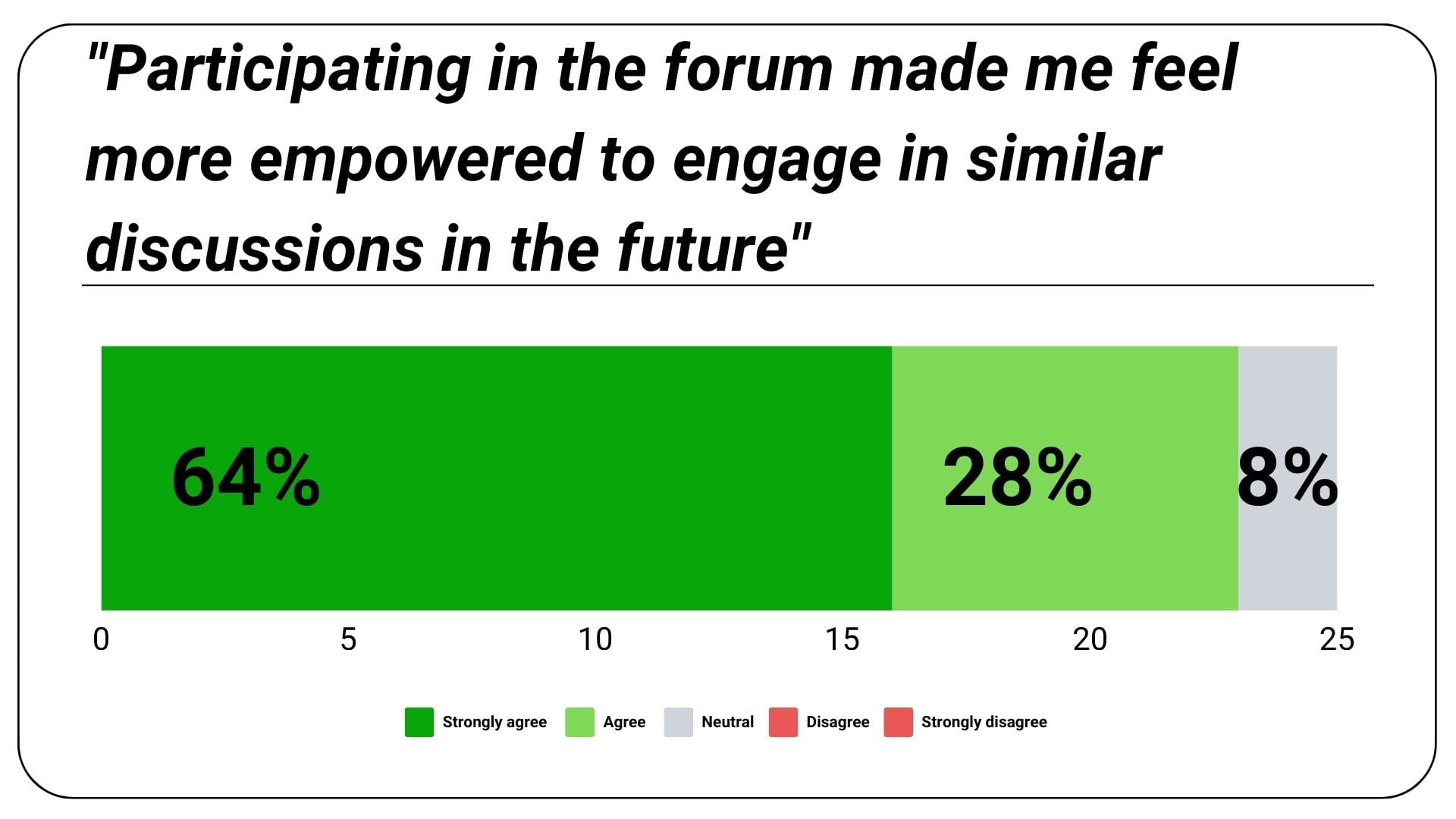
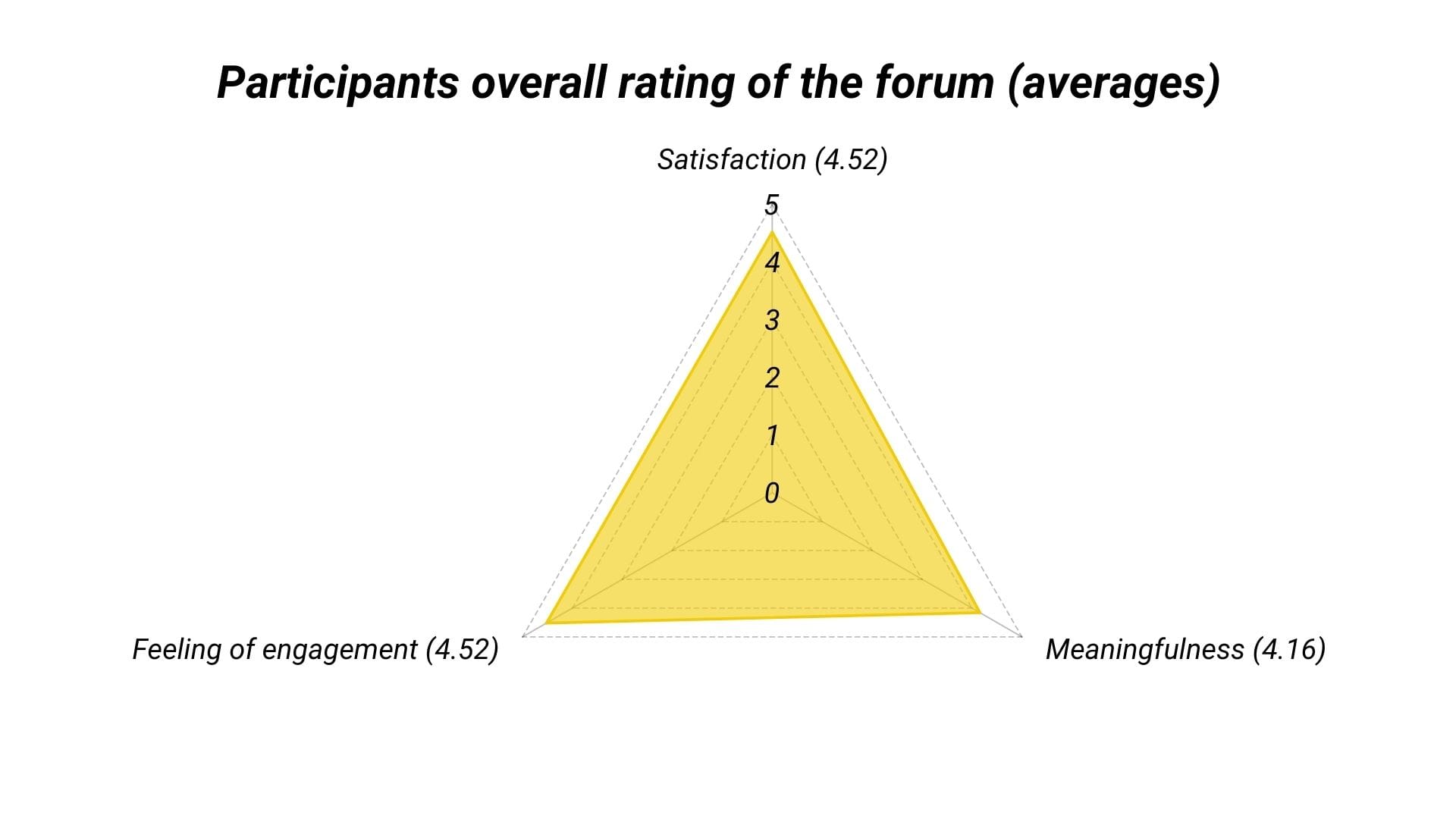
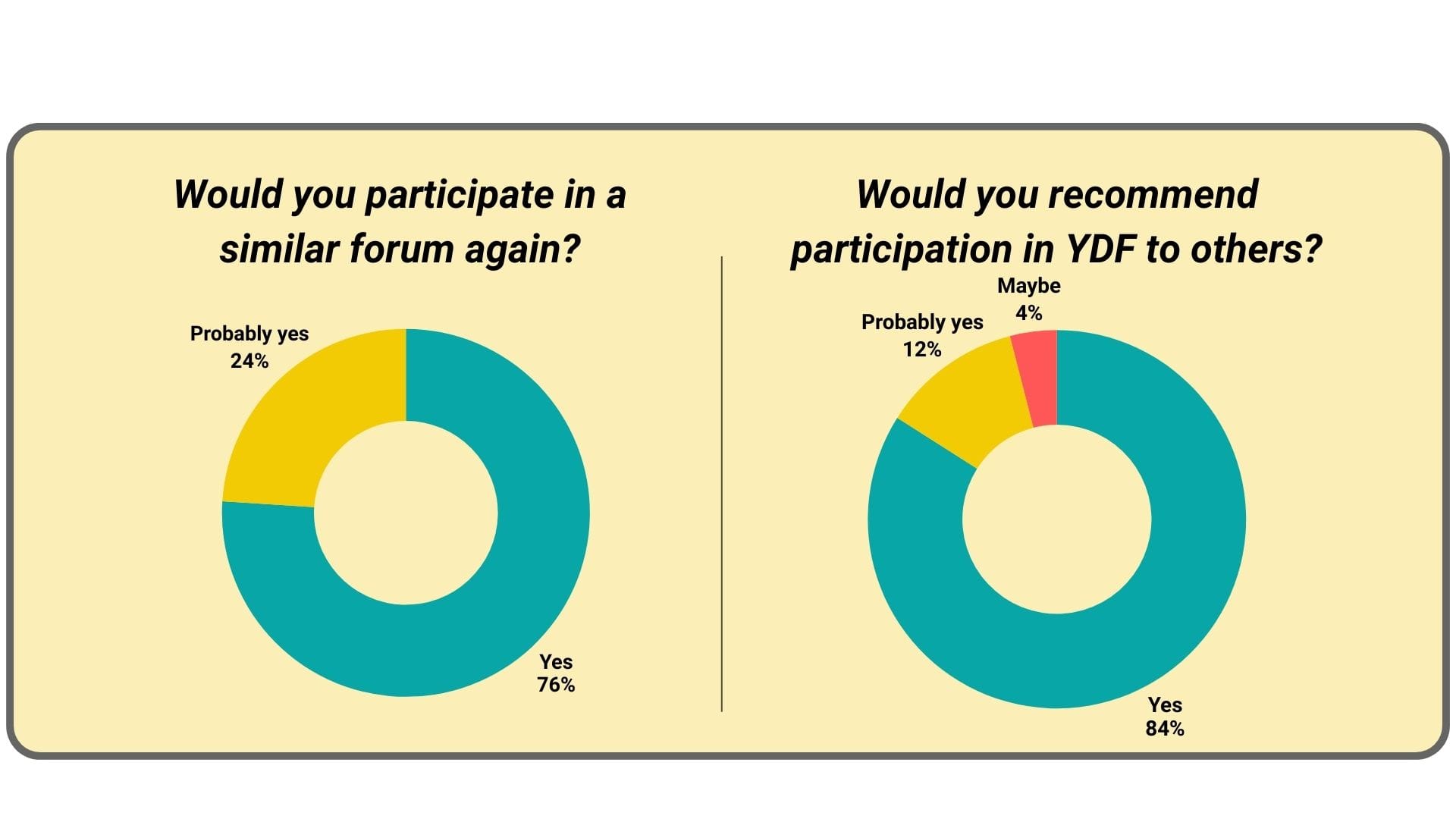
Feedbacks on the forum
National reports
The First Digital Discussion
Czech Republic: https://www.themis.demdis.sk/conversations/fc35b11e-6560-4b51-a75d-437d38deb2d4/reports/ydf_cz_national_report?language=en
The Second Digital Discussion
Czech Republic:https://www.themis.demdis.sk/conversations/4d017d77-7490-4e5a-b04c-a21bf0762189/reports/czreport?language=en
Stay tuned!
About YDF 25 | Rulebook of YDF 25 | Results of YDF 24
The project is co-financed by the governments of Czechia, Hungary, Poland and Slovakia through Visegrad Grants from the International Visegrad Fund. The mission of the fund is to advance ideas for sustainable regional cooperation in Central Europe.